
Common Structural Issues Found in Older Sussex Homes
The good news is that not every crack means disaster. In many cases, the issue is manageable once the cause is properly understood. The key is getting clear structural advice early, before a small problem turns into a more expensive one.

Why older Sussex homes can develop structural issues
- Coastal exposure in some areas
- Ground movement and changing soil conditions
- Long-term water ingress
- Poor-quality past renovations
- Structural changes were made without proper calculations
These issues do not always mean a property is unsafe, but they do mean it is worth investigating concerns properly.
Cracks in walls and ceilings
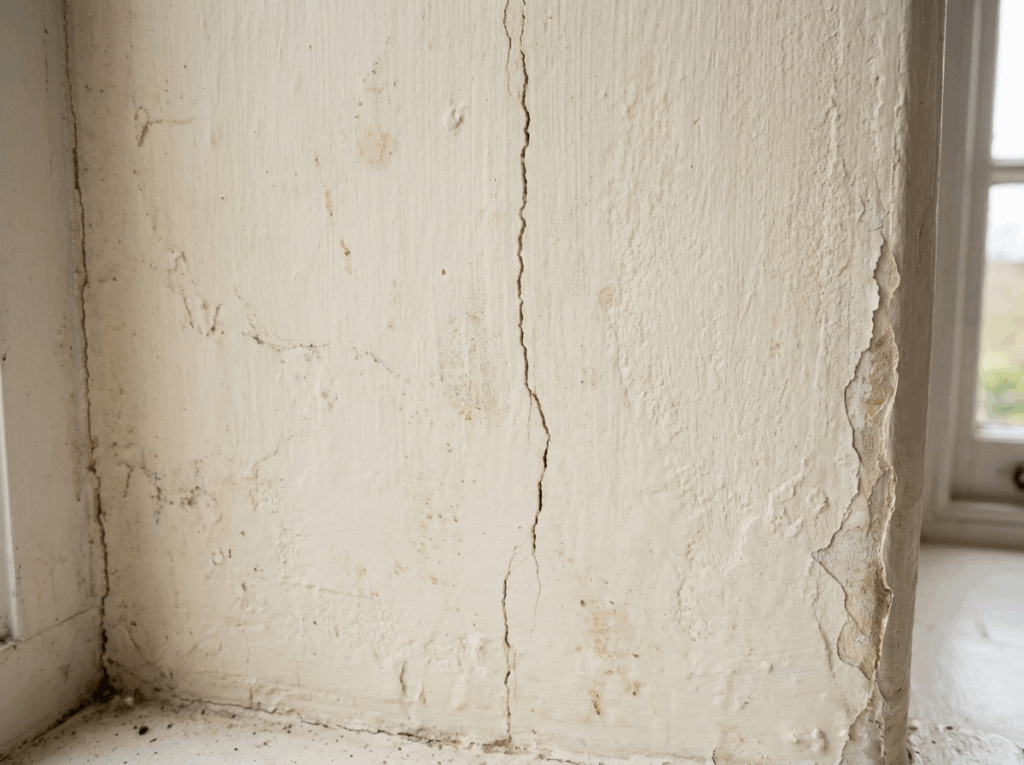
- Cracks are wider than a few millimetres
- Cracks keep getting bigger
- Cracks appear around doors, windows, or extensions
- Doors or windows start sticking at the same time
- Cracks run diagonally rather than just along plaster lines
The important thing is not to guess. A structural engineer can help identify whether the issue is surface-level or linked to movement in the building.
Movement and settlement
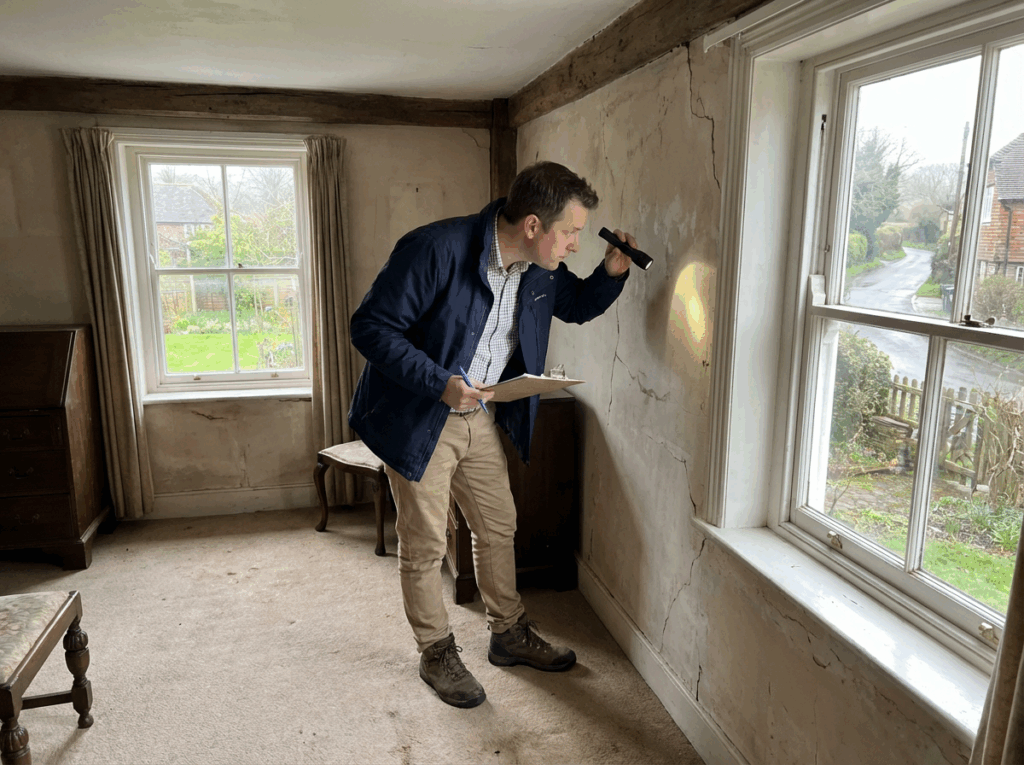
- Sloping floors
- Uneven ceilings
- Gaps around skirting boards or window frames
- Cracks that reopen after repair
- Visible distortion in walls
Understanding the cause matters. It could be minor age-related movement, or it could be linked to foundations, drainage, nearby trees, or previous building work.
Problems caused by removing load-bearing walls
- Sagging ceilings
- Bouncy floors
- Cracking above openings
- Visible deflection in beams or lintels
This is especially common in properties that have been altered over time without proper structural calculations. A structural engineer can assess whether the right support is in place and what needs to be done if it is not.
Roof spread and timber issues

- Bowing or leaning walls
- A sagging roofline
- Cracks at the top of upper-floor walls
- Signs of timber rot or damp in the loft
Roof issues often worsen slowly, which makes them easy to miss until the repair becomes more involved.
Damp-related structural damage
- Timber floor joists
- Roof timbers
- Lintels
- Basement or lower-ground walls
- Chimney breasts and parapets
If damp has been present for a long time, it is worth checking whether the structure itself has been affected.
Foundation concerns and local ground conditions
When should you call a structural engineer?

- Buying an older property
- Renovating a period home
- Removing internal walls
- Extending or converting the loft
- Repairing suspected movement or structural damage