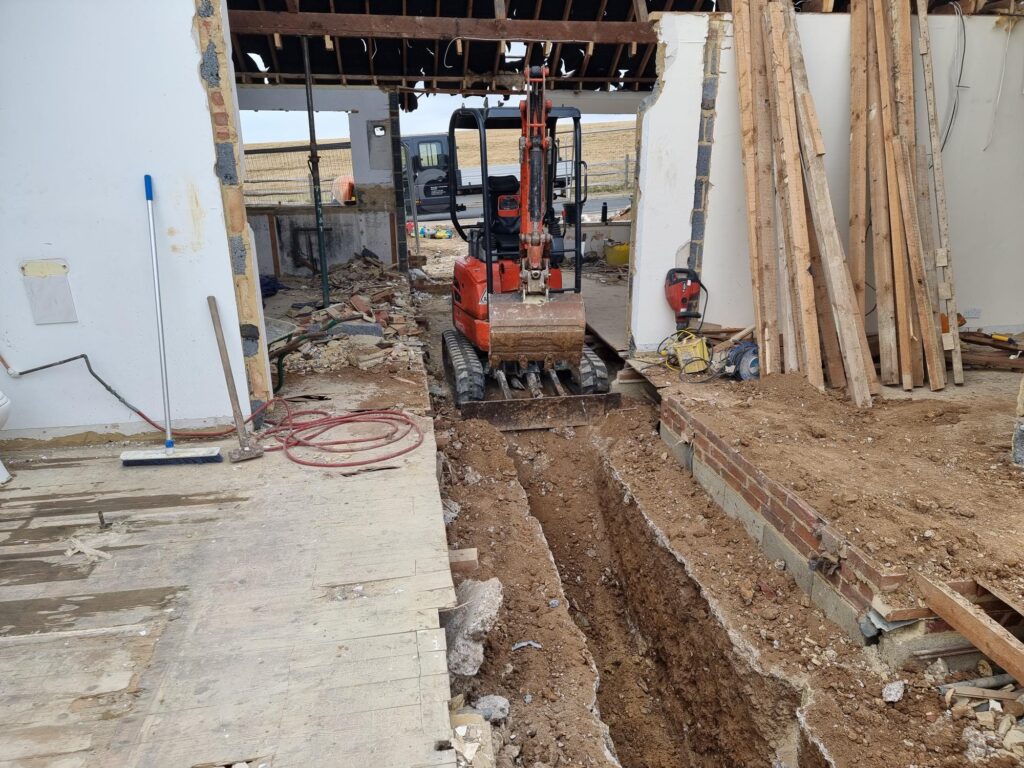
What Kind of Foundations Does My Project Need?
Why foundations matter?
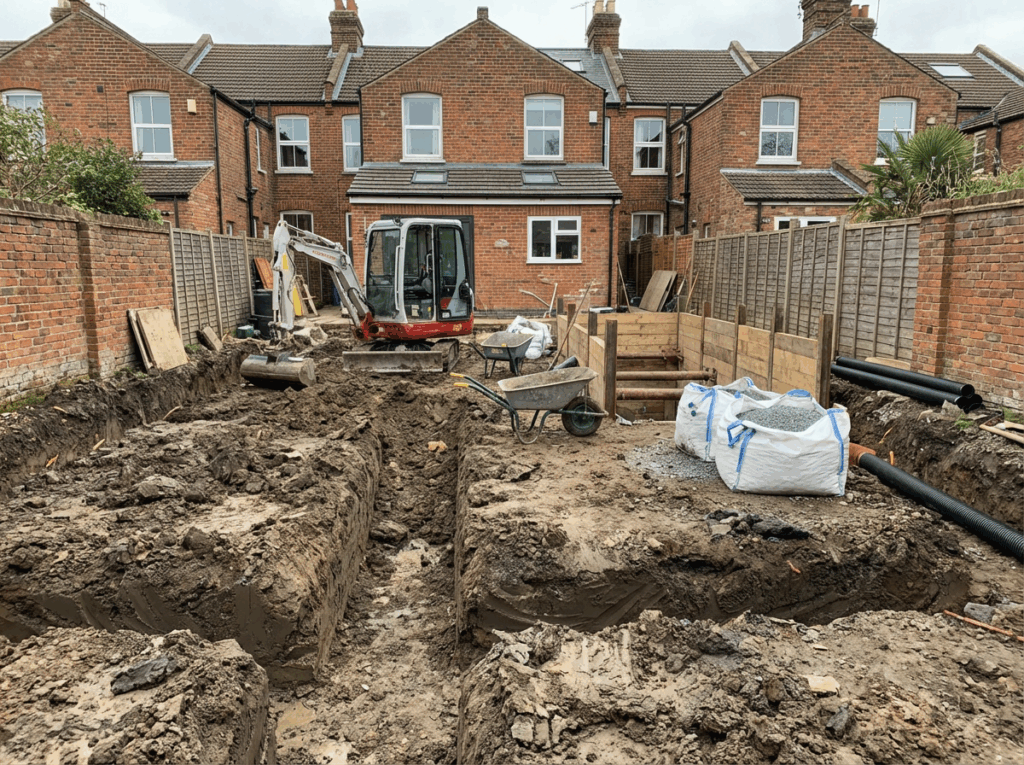
What affects the type of foundation you need?
- Ground conditions and soil type
- Size and weight of the proposed structure
- Depth of nearby trees and roots
- Drainage and water conditions
- Nearby buildings and boundaries
- Existing foundations if you are extending a property
- Building Regulations requirements
This is why two projects that look similar on the surface can need very different foundation solutions.
Common types of foundations
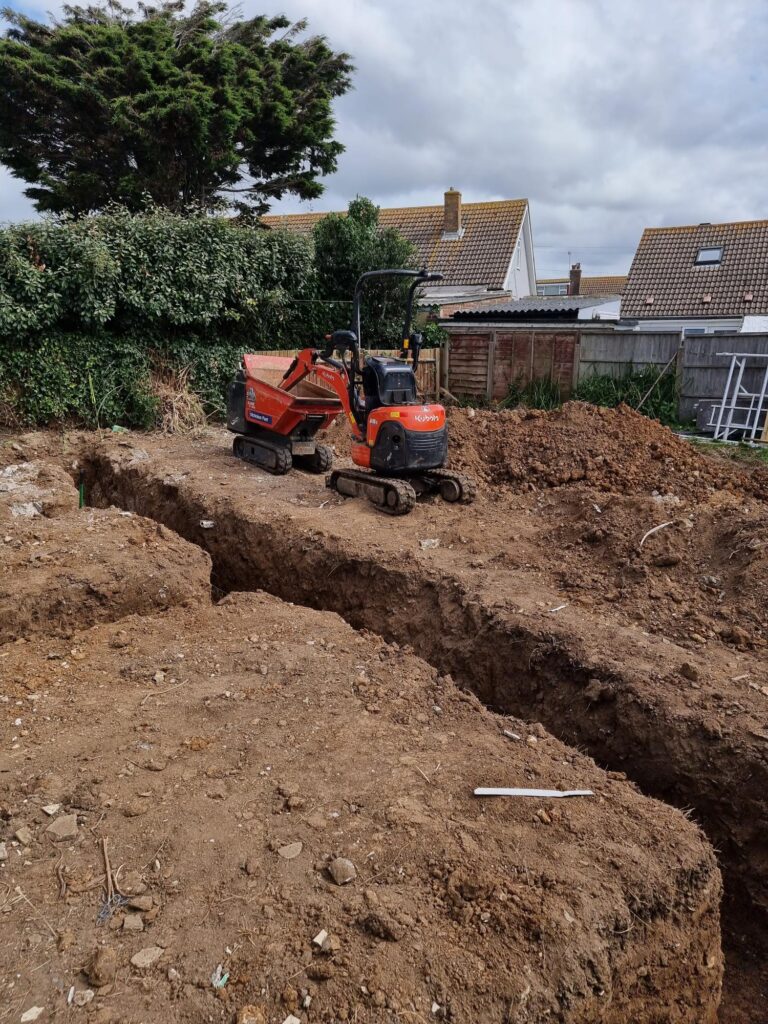
1. Strip foundations
- Ground conditions are suitable
- Loads are fairly straightforward
- The project is a typical house extension or low-rise build
They are often a practical and cost-effective choice, but only if the ground can support them properly.
2. Trench fill foundations
- Ground conditions require deeper excavation
- Faster construction is preferred
- Access and buildability matter on-site
They can be a good option for domestic extensions and new builds, especially where on-site efficiency is important.
3. Pad foundations
- The structure uses columns rather than load-bearing walls
- Steel frames are involved
- Loads are concentrated in certain locations
These are often seen in more engineered layouts rather than standard domestic wall construction.
4. Raft foundations
- Soil has lower bearing capacity
- The risk of differential movement is higher
- The building layout suits a full slab solution
They can be very effective, but they need proper design and coordination.
5. Piled foundations
- Near-surface soil is poor
- Trees or shrinkable clay affect the ground
- The project is larger or more heavily loaded
- Standard shallow foundations are not suitable
Piled foundations are usually more specialist and can cost more, but in some cases they are the safest and most practical option.
Do foundations need to match the existing house?
Can soil and trees affect foundation design?
- Ground movement can affect stability
- Foundation depth may need to increase
- Tree location can influence Building Control decisions
- Drainage issues can weaken support conditions
Even a modest domestic project may need a different foundation solution because of what is happening below ground.
When should you get structural advice?
- Planning an extension or new build
- Unsure what foundation type is suitable
- Building near trees or sloping ground
- Working on an older property
- Dealing with unusual site conditions
- Coordinating with an architect or builder before construction
Early structural input helps avoid guesswork and gives everyone a clearer plan.